DANIEL PEDRO BARRIOS CAVERO
Before starting the projects, I took some time to get to know the people who form part of Assalam and absorb their rhythm of life. From the very first moment, I felt welcomed not only by the team of volunteers and local workers but also by the campus’ most charismatic inhabitants: the monkeys, dogs, and cats that wander freely and make sure no one ever feels lonely. During those first days, I also had the chance to explore Kizimkazi, the coastal village where the campus is located, and Stone Town, the UNESCO World Heritage heart of Zanzibar. Walking through its narrow streets, surrounded by the echo of centuries-old stories, I felt both a visitor and a part of something timeless. Sharing these experiences with other volunteers, especially walking along the beaches at sunset, made me feel immediately connected to this place.
On Monday the 6th, we officially began our projects. I was assigned to the Art Department, where I met its director, Sam. During the first days, I attended the art classes — the children were beginning to prepare a play inspired by a traditional Zanzibari tale. On Wednesday, a theatre director from Turkey arrived; he will be training the students for the next six weeks to create a major performance featuring local music and traditional dances. Because of this exciting development, I was also assigned to an additional field of work alongside my art duties.
That’s how I joined Zanzibar Stories and Ecotours, a social enterprise led by Mohammed. I learned that Assalam sustains many of its educational and community programs through these enterprises, a model that deeply impressed me. My work there was diverse: I designed the company’s logo and prepared detailed descriptions for their tours — from visiting the sandbanks and swimming with dolphins to exploring Stone Town’s heritage and taking quad tours through the island’s eastern coast.
Volunteering Experience in Tanzania
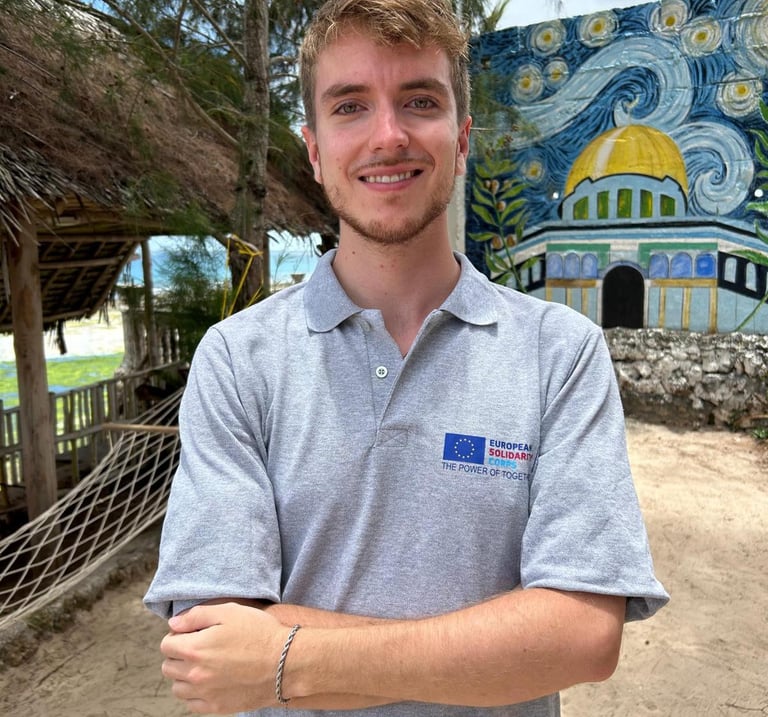
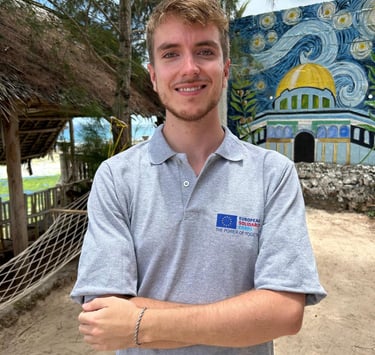
After week 1, on the weekend, I travelled to Dar es-Salaam with my three colleagues and friends — Héctor, Matteo, and Noémi — and what an adventure it was! We took the ferry from Stone Town, a 90-minute trip that costs around 30€. The sea was rough, and what started with laughter soon turned into a roller coaster as people began to feel seasick and rush to the bathrooms — but I have to admit, I loved every second of it!
Dar es-Salaam completely captivated me. It’s a big vibrant city, full of life and history. We explored the energetic nightlife and visited two fascinating museums: the Village Museum, which showcases traditional houses still used by mainland tribes, and the National Museum and House of Culture, which traces Tanzania’s history from the dawn of humankind to independence — passing through the painful chapters of the slave trade and colonization. To everyone’s relief, we flew back to Zanzibar — just a 20-minute flight for 20€ — a much calmer journey for those who suffered on the ferry!
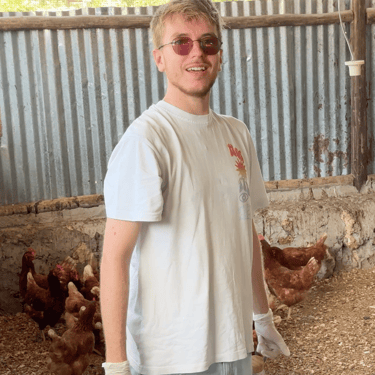
Back on campus, the week began with new routines. Since Monday, we’ve been doing daily permaculture sessions starting at 8 a.m. and lasting about an hour to an hour and a half. Each morning brings something different: harvesting tomatoes, taking care of the goats, collecting eggs, preparing “worm tea” (a natural insecticide made from worm castings), and even milking the cow. It’s exhausting at times, but so fulfilling — there’s something peaceful about beginning the day working with the earth.
Tuesday the 14th was Nyerere Day, a national holiday, so we took the chance to visit Mtende Beach — a stunning natural spot that’s only accessible at low tide. In Zanzibar, the tides transform the entire landscape, sometimes with a difference in sea level of up to four meters. The beach was full of life: thousands of tiny marble-sized crabs running in all directions, creating little holes that made the sand look like Swiss cheese. We also spotted moray eels, starfish, hermit crabs, sea urchins, brittle stars (faster, more agile starfish), and colorful fish swimming around the coral. When the tide began to rise, we went to a nearby restaurant surrounded by lush forest and giant baobabs. As the sun went down, monkeys appeared among the branches, the perfect ending to a magical day.
During the week, there was also a STEAM competition with 230 primary and secondary students from all over Zanzibar. Seeing their projects was truly inspiring — so many creative and sustainable ideas, many of them made from recycled materials or powered by renewable energy. It really showed how much young people care about protecting the island’s fragile environment.
The art department is also buzzing with energy as preparations continue for the big show. Every day, I try to stop by the art center to see Sam working with the kids. Watching them rehearse, moving together with such harmony while live music fills the space, is incredibly moving.
Something I forgot to mention last week is that we have daily Swahili lessons from 1:30 to 2:30 p.m. The progress we’re making is amazing, thanks to our incredible teachers, Tina and Rumbi. Asante sana!
To top off an already memorable week, on Friday we were invited to a traditional Zanzibari wedding — Simba, one of the foundation’s drivers, was the groom! It was a wonderful experience to witness such a cultural celebration so full of color.
Not everything went smoothly, though — a few of us, including Héctor and me, ended up with scombroid poisoning. Food preservation isn’t exactly Zanzibar’s strong point, so lesson learned: always be cautious! Still, even that couldn’t spoil what has been an exciting and enriching week.
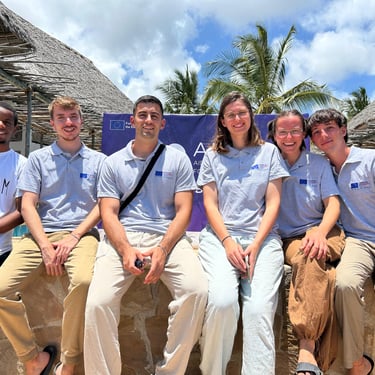
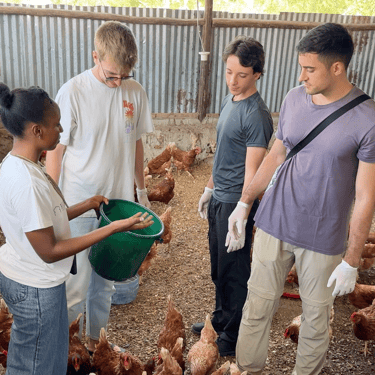
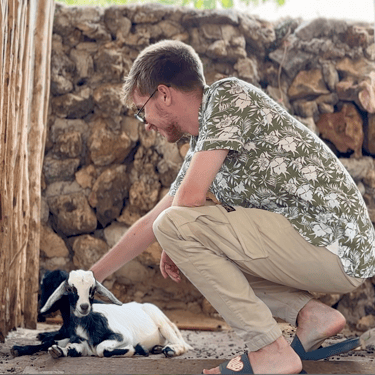
Finally, I began working with Robert on the Ecotours that welcome visitors to the Assalam campus. These tours invite them to discover the organization’s work firsthand and experience the wide range of initiatives it supports. We begin by visiting the school, where hundreds of children from nearby villages receive free education. Then, we move to the permaculture area, where we explain how we live sustainably from what we cultivate and the animals we raise with care and respect. Next comes the Art Department, where children and youth learn music, traditional dance, and theatre. We also showcase the Empowerment area, where young people are trained in soap-making, wood carving, pottery, electricity, carpentry, and sewing. Finally, the tour ends with the Community section — where volunteers and locals work hand in hand — and concludes at the Jetsea, a wooden balcony overlooking the ocean, where the sunset offers a breathtaking reminder of the beauty and purpose of our work here.
These first days have been both inspiring and humbling. I feel grateful to be part of such a passionate and collaborative environment, where creativity, education, and community truly come together to make a difference.
We took advantage of Simba’s wedding in Paje to spend the weekend there. Paje is a touristic coastal town on the east side of Zanzibar, with an endless white-sand beach. I stayed in a hostel with Matteo, Claudia, and Héctor, and we spent two nights there. We really enjoyed the nightlife —each evening we went to a different pub, meeting new people and dancing to local trendy music.
On Saturday at noon, I went back to the Assalam campus with Claudia on a bodaboda (motorbike). There were two of us plus the driver, which made the trip even more fun! We returned because it was Islamic Day at Assalam. The event included a sort of quiz where children were asked about Islamic history and verses from the Quran. Later that day, we visited an orphanage in Stone Town. It was a tough and emotional experience, seeing those children without families, but we left feeling comforted knowing they are being cared for and receiving an education that can give them hope for the future.
After that, we went back to Paje with our friends and spent the evening in a lively pub by the sea. The atmosphere was amazing, with great Afrobeat music. The bar had a terrace right on the shore, and when the tide came in, they had to take it down as the waves swallowed the entire beach —I already told you before that the tides here completely change the landscape! On Sunday morning, we went kitesurfing and I had a video call with my family before heading back to the campus. It was so special to see my little nephews again —I miss them so much.
Back on campus, life returned to routine. On Monday we celebrated Matteo’s and Huma’s birthdays (Huma is the daughter of the foundation’s director). We shared cake, sang, and danced together —it was such a joyful evening. We danced to Tanzanian, Turkish, Serbian, Palestinian, Indian, Moroccan songs, and even the Macarena! Later, when the tide was low, we went down to the beach with towels to lie under the stars.
During the week, I worked mainly with Nagla and Elisa on grant proposals. We are trying to secure funding for several projects, including one focused on digital transformation and environmental education. In permaculture, we fed the chickens and prepared supports for the tomato plants.
On Tuesday, I joined the pottery workshop. I made a cup with the help of the teacher, who only spoke Swahili. It was really challenging to work with clay without a potter’s wheel and without sharing a language, but it turned out to be an incredible experience. Later that day, after Swahili class, we had the weekly clubs. I joined the environmental club, where the children collected flowers and leaves to dry and use for making bookmarks the following week —it was a fun and creative activity to share with them.
On Wednesday, we started the day with a duwa (prayer) for the foundation director’s mother, who is ill. On Friday, after work, we walked around the village and then went to a nearby hotel pool. Later we had dinner on campus and ended the evening playing volleyball and jumping on the trampolines while listening to music —a perfect way to release all our energy!
Next week there will be no classes due to the presidential elections on Wednesday 29th. Because of the safety recommendations to avoid unnecessary travel, I decided to stay in the area and join a diving course with Héctor and Mehmet. On Saturday we had our first lesson —we learned about the equipment, how to use it, and did our first dive in a swimming pool to practice assembling it and handling emergencies underwater.
On Sunday we went into the open sea for the first time. It was quite hard for me to learn how to equalize the pressure in my ears, but with the instructor’s help I managed. We went down to 9 meters first, then to 12.6. What I saw there was simply breathtaking —a pink and purple coral wall about five meters tall, full of fish of every color and size, and plants that looked like they belonged to another world. It was one of the most spectacular experiences I’ve ever had. Even now, I find it hard to describe it to my friends and family.
I’m not sure what next week will bring, but since it’s election time, it will probably be calm. We’ve been advised to stay around campus, so I’ll take it easy and see what unfolds.
This week has been quite different from usual at Assalam. There were no classes at the school because of the national elections, and the campus felt unusually calm and quiet.
On Monday evening, after dinner, I went with Héctor to a hotel where a live band plays every week. One of the musicians is Sam, the head of the Art Department at Assalam! He plays traditional drums and percussion. It was raining heavily, and we decided to go by bike anyway — about a 15-minute ride along a muddy dirt road full of puddles. We arrived completely soaked, but it was such a fun adventure. The band played songs like Hotel California and La Bamba with a reggae twist, and the atmosphere was vibrant despite the weather.
On Tuesday after work, I went for a walk with some colleagues — Amaal, Elisa, Claudia, and Héctor. We explored a part of the village we hadn’t seen before, following a small road lined with palm trees and banana plants. Along the way, we even saw some goats wandering around. We ended up at Machomwe Cave, a beautiful spot with a sloping entrance, amazing stalactites, and a pool of water inside — the perfect home for bats.
Wednesday was election day. Around noon, the internet was cut off — something we had been warned might happen, as the government often shuts it down “to prevent protests”. At first, we thought it would just be for a few hours, but it stayed down for the rest of the week. Without internet, I couldn’t work on my usual tasks, so I spent more time helping in the permaculture area and watching Sam and his band rehearse at the Art Center.
From Wednesday to Friday, we mostly went to the beach to swim and relax. Local colleagues kept telling us not to go too far, since the few bits of news we heard weren’t good. Protests had erupted in Dar es-Salaam and other cities in the north on election day, as many people claimed the process was rigged. Opposition candidates who could have challenged the president “Mama Samia” and her CCM party — in power for over sixty years — had been detained or disqualified.
We tried to stay calm, though we were anxious about not being able to contact our families. On Friday, we finally heard reports that around 800 people might have been killed in the repression, though no official numbers were confirmed. It was shocking and heartbreaking.
On Saturday, to clear our minds, we went on a Sea Safari, a five-hour dhow trip through the Zanzibar sea. We visited Kwale Sandbank, where we ate tropical fruits like pineapple, coconut, passion fruit, and mango, and went snorkeling among colorful fish. Later, we visited the Blue Lagoon, a turquoise saltwater pool surrounded by mangroves, and had a delicious lunch of grilled lobster, octopus, prawns, fish, fries, and rice. On the way back, the crew raised the sail, and we glided over the water in complete silence — it was wonderful, an unforgettable experience.
That evening, after dinner, we helped prepare small gift packs for the children who would come the next day for the Orphans Festival. We made eco-friendly soap bundles wrapped in palm leaves and natural string — simple but beautiful.
On Sunday, Assalam hosted about a hundred orphans from across Zanzibar for a day full of joy and creativity. Héctor and I were assigned as youth leaders for a group of about twenty children aged seven to fourteen. We accompanied them through the different workshops — origami, bracelet making, balloon figures, face painting, and eco-printing. After finishing the workshops, we all shared a delicious meal of pilau rice with meat, followed by a talent show and games. It was exhausting but incredibly rewarding to see the children’s smiles and energy.
By the end of the week, we had only had a few brief seconds of internet connection — just enough to receive some messages from worried friends, but not to reply. It’s made me realize how easily we take democracy and communication for granted, until one day, everything changes. As citizens, we must protect our rights and ensure that no one takes them away from us. I’m left wondering — when will we finally get our connection with the world back.
On Tuesday the 4th, we finally regained access to the internet. Since work at Assalam was still slowly picking up again, I took the chance to finish my diving course in the village. The sea was wild that day—the tide was rising and the current was so strong that I barely had to move my feet, as if I were a feather carried effortlessly by the wind. It was incredible to see so many different fish drifting past me. My instructor, a local from Kizimkazi, guided me through every detail with so much patience and enthusiasm that it made the experience even more special.
After completing the course, I went to a small local restaurant with my colleague Claudia. We had kingfish, and I was amazed once again by how good fish is here—straight from the boat into the kitchen.
On Wednesday evening, after dinner, we gathered to say goodbye to two of our colleagues. The celebration was simple but heartfelt, with cake and karaoke. I always enjoy these moments because they remind us of everything we've experienced together. There’s something very genuine about singing, laughing, and remembering with both volunteers and some of the local staff; it creates a sense of community that feels like family.
Thursday was also special. We filmed the “crowning trend” for Assalam’s social media, and later Claudia and I joined a workshop to make hats out of palm leaves. The weaving technique was surprisingly simple and reminded me of wicker products from Spain. Our small group—just the teacher, seven or eight kids, and the two of us—felt intimate and warm. I love learning crafts from people who truly master them, it feels like receiving a piece of their culture.
On Friday, after work, I went with a few colleagues to Stone Town. We had dinner at Forodhani, a park by the sea that comes alive at night with dozens of street-food stalls. We ate shawarma and walked through the city under the warm night air. The next morning, we explored the Darajani Souk, a bustling market full of everything imaginable—fabrics, sandals, phone accessories, spices, and more. We also admired the beautifully carved wooden doors of Stone Town, blending Indian and Arab influences, and visited the Old Fort of Zanzibar, a 17th-century structure with both Portuguese and Omani history.
After lunch we took a taxi to Kendwa, on the northern tip of the island. The drive was supposed to take about an hour and a quarter, but we shockingly made it in forty-five minutes—driving here can be quite an experience. In Kendwa, we checked into a hostel because we planned to attend the Full Moon Party, a monthly event that brings together locals and tourists from all over the island. The next day we visited Nungwi, a nearby coastal town that is much more touristic. There are countless souvenir shops and beach clubs, where paying a $20 entrance fee gives you credit for food or drinks. We spent the day in one of these clubs, relaxing by a huge pool overlooking the white-sand beach and crystal-clear water. After sunset, we took another long taxi ride back to Assalam campus.
Overall, it was a very fun and memorable week—one that reminded me why I love being here and how many beautiful things this island has to offer.
This week at Assalam felt like a whirlwind of activity, emotions and unforgettable moments. It all began on Monday with Sports Day. In the morning we went with the schoolchildren to a nearby football field where we had organized a full program of activities: sack races, 50m and 100m sprints, javelin throwing, bike races, speed walking, football matches, and even tug of war. The heat was intense, and by the end a sudden rain surprised us, but none of us—children, volunteers, or teachers—seemed to mind. We were all too busy enjoying and cheering. After returning to campus for lunch, the fun continued with basketball games, table tennis, chess matches, and memory games. We ended the day dancing afrobeats with the kids, tired but happy.
Tuesday and Wednesday were calmer, filled with my usual tasks at Assalam. In the afternoons I either went to relax at the beach or stayed painting near the sea with Claudia. The anniversary of the organization was approaching, and the Arts Department had been preparing their long-awaited show for a month. This week they held several full rehearsals, and when I saw the first complete run-through, I honestly felt a bit emotional. It had been a tough month for them, and witnessing their hard work come together so beautifully really moved me.
On Thursday we had two community activities. The first was a campus clean-up: volunteers, local workers and schoolchildren joined forces to clear the entrance area of dry palm leaves, overgrown plants, and weeds. The funniest moment was watching one of the local workers trimming tree branches with a machete, only to be chased by a swarm of bees. He ran for almost ten minutes, machete in hand, while all of us—including him—couldn’t stop laughing.
In the afternoon we had an ecoprinting workshop. We collected leaves and flowers, soaked white fabric in iron sulfate, carefully arranged the plants between two layers of cloth, rolled everything tightly, wrapped it in plastic and thread, and boiled it for an hour and a half with stones weighing it down. The final result was amazing—leaf shapes printed in shades of blue and green, each one unique depending on the pigments of the chosen plants.
That night, after dinner, I helped Samuel and Yussuf set up the area for the Friday Jumaa prayer by tying fabrics above the playground to create a makeshift roof. While working, I heard the cries of a bushbaby in the trees. Curious, I followed the sounds with my phone flashlight until two bright orange eyes reflected back at me. I tracked it from tree to rooftop to another tree, and eventually ended up in the permaculture area where not one but at least two bushbabies were moving around the compost. At one point I heard something large rustling on the ground—a huge rat-like creature with a long hairless tail. After some research I thought it was a Gambian giant rat, but people also told me it might have been a kicheche or African civet, especially since some chickens had been found dead recently. By the end of the night I was exhausted, but it was one of the most fascinating days I’ve had here.
Friday morning was all about final preparations for the anniversary celebration. I helped chop vegetables in the kitchen and then carried large carpets to the playground for the Jumaa prayer. Families and schoolchildren began arriving around 10 am. After the prayer we helped distribute meal plates, and once everyone had eaten, we finally sat down to enjoy our own meal—Pilau with meat, one of my favorite dishes here.
On Saturday at 7 a.m. I joined the Art group for a photo and video session at a nearby beach that’s accessible at low tide. We carried tables, flags, drums, and other equipment, and I helped the social media team film different parts of the show. The location was stunning—white sand and turquoise water—but we were racing against the rising tide. In the end, we had to leave almost swimming, exiting through the resort next to Assalam.
Later we took a trip to Jozani Forest, the only national park in Zanzibar. A forest ranger guided us through mangroves, tropical forest, and coastal grasslands, showing us animals like mangrove crabs, blue monkeys, the endangered red colobus, elephant shrews, tiny frogs, and insects. We visited a small conservation center with butterflies, chameleons, and even a couple of bushbabies. After the tour, we stopped by roadside stalls for fruit and water. I bought a cacao pod, and the vendor cracked it open with a machete so I could try the seeds covered in their tangy white pulp—surprisingly acidic and reminiscent of baobab.
Finally, Sunday arrived—my only true rest day this week. I let myself wake up naturally, and in the afternoon I went swimming and sunbathing with Claudia. I brought my underwater camera and filmed clownfish, blue tangs, Moorish idols, green trumpetfish, and many others I couldn’t name. I even saw the ever-intimidating lionfish, slow and elegant, flaunting its venomous spines. Beautiful, but terrifying.
As I’ve said many times, this week was an emotional roller coaster—but I loved every moment of it.
DANIEL PEDRO BARRIOS CAVERO
SUBSCRIBE
Subscribe to be updated about latest news and blog posts and to follow what is happening in a magical land of Bali.
Fatma Sümeyye Şahin
Çengelköy, Kalantor Sk. No:6 Üsküdar/İstanbul
Project Coordinator
Address
Telephone
+90 551 256 52 46