

FEDERICO MICHELI
Volunteering Experience in Nepal
Week 1
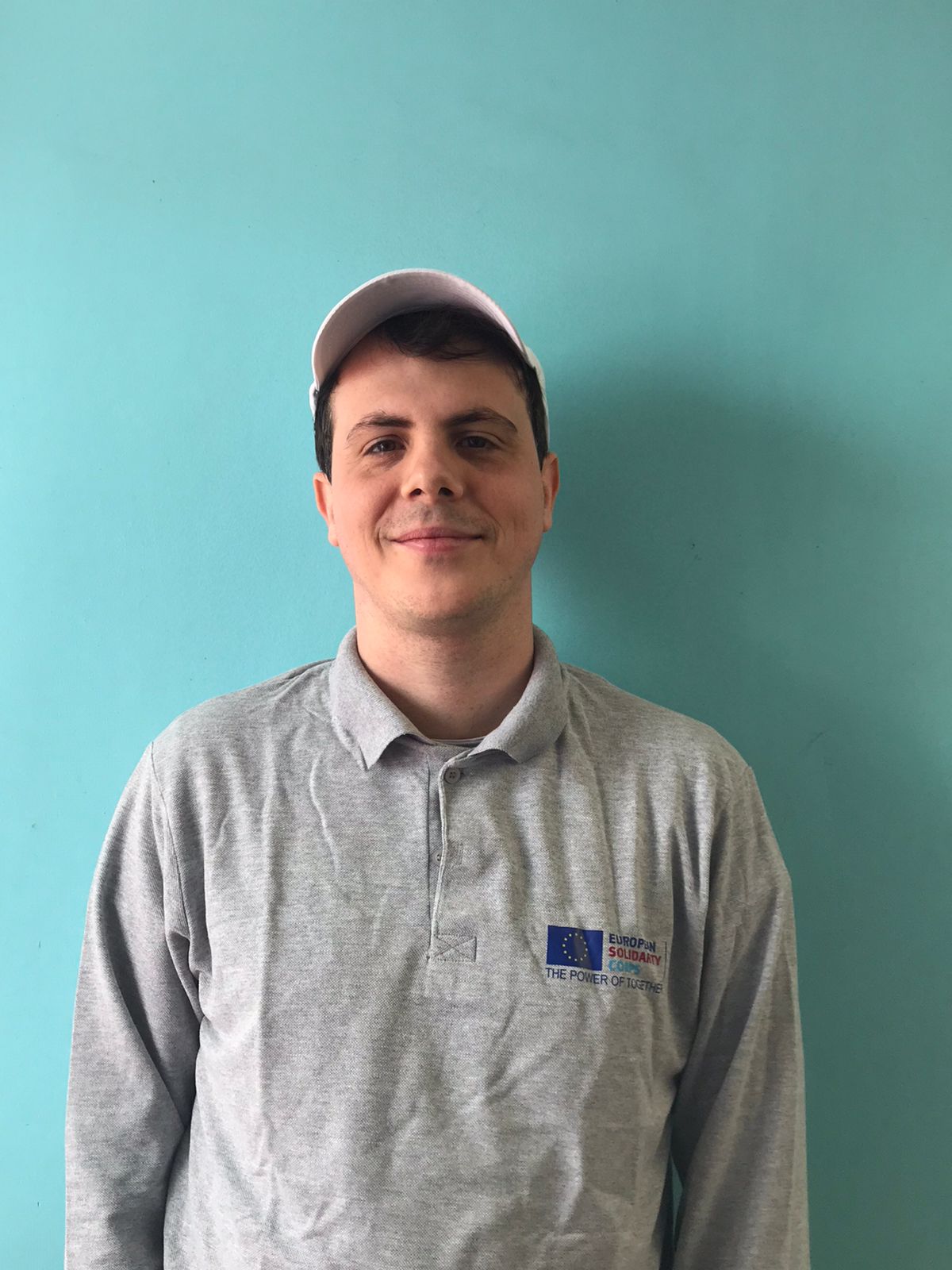
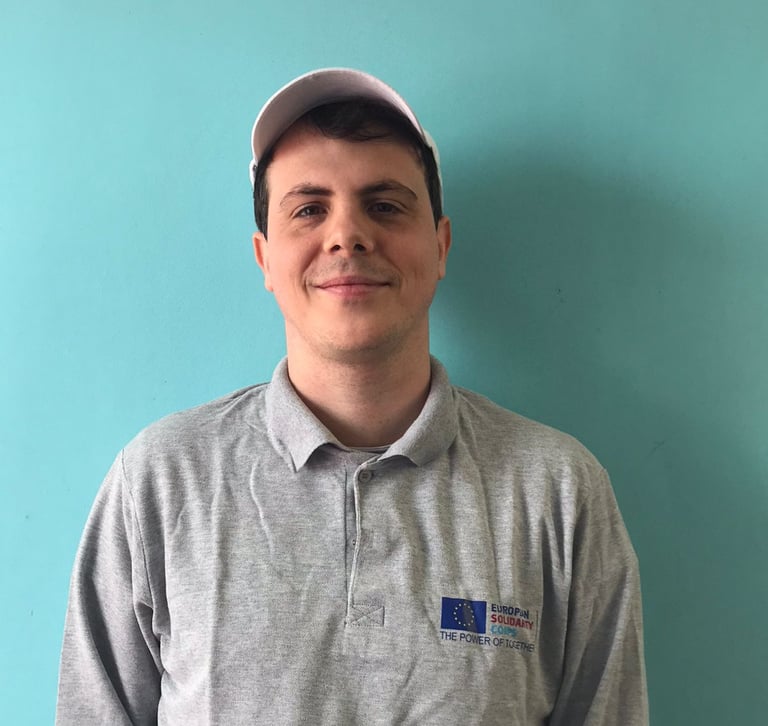
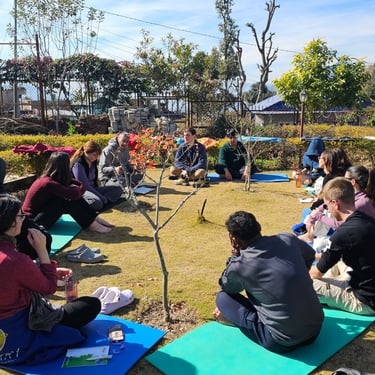
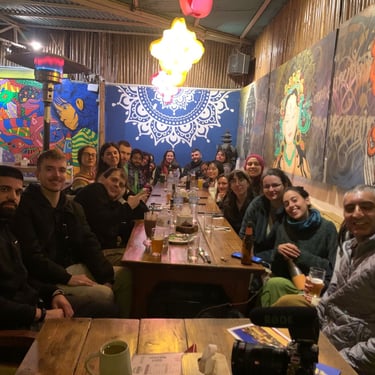
During the first week of the project, we arrived in Kathmandu, where we focused mainly on orientation and preparation. We took part in several preparatory meetings, which helped us better understand the project, its objectives, and the local context. We also had time to visit the city, which allowed us to begin familiarizing ourselves with Nepali culture and daily life. This first week was especially important for getting to know my fellow European and Nepali volunteers, with whom I will be spending the next two months, and to start building a sense of group cohesion.
After a long journey, we then traveled to the beautiful region of Okhaldhunga. There, we continued with further preparatory meetings and introductory activities, and we began visiting the surrounding local villages in order to better understand the community where we will be working. At the center, other volunteers were waiting for us, and we shared meals and daily activities together, which helped us integrate into the group and adapt to our new environment. We are now preparing to visit several villages in the coming week and to begin our activities in local schools.
Week 2
During this week, we visited the two schools assigned to our group: Anandeshwor Basic School and Tinpiple Basic School. Both institutions are basic schools, covering grades 1 to 8 (approximately ages 5–12). We visited each school twice.
During our first meetings with the students, we mainly organised games and interactive activities. The aim was to build a bond with the children and to better understand their actual level of English.
Week 3
This week, our efforts at Tinpiple Basic School were dedicated to the Children's Club. Our initial step was to investigate its existence and structure. The Club is intended to be a formal student representation with elected roles like chairperson and secretary, serving as a platform for students to develop key skills such as communication, project management, and responsibility by organizing activities for the school.
We discovered that while a committee had been elected, it was largely inactive. We began by re-introducing the core concept and clarifying each role's duties. This successfully sparked engagement, and we gathered numerous activity proposals from the students. In a democratic vote, they selected their first project: a thorough cleaning of the school and its surroundings. The chairperson has now taken ownership of planning the next steps for this initiative before our return.
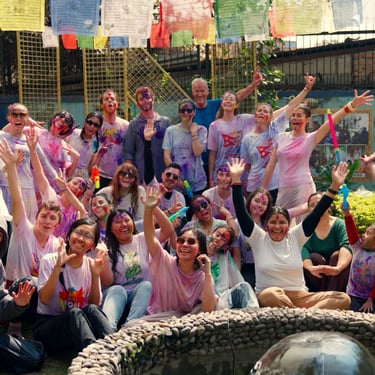
A beautiful cultural interlude came with the Hindu holiday of Saraswati Puja, a festival dedicated to the goddess of knowledge, music, and wisdom. We were honored to be invited to the celebration at the school. It was a valuable opportunity to meet teachers and students outside the formal classroom environment and to participate directly in Nepali traditions. And, of course, we even got to dance with the kids!
Week 4
We visited Anandeshwor Basic School several times this week and spent quite a lot of time working with the children on emotions. The main idea was to help them understand why it matters to notice how they feel and to talk about it. Along the way, we also tried to support their creativity, build up their English vocabulary, and encourage them to communicate more confidently.
We used different drawing tasks where the children made faces showing a range of emotions, for example anger, sadness, happiness, guilt, disgust, jealousy, nervousness, fear, surprise, and pride. We also played interactive games such as charades, in which the children showed emotions using body movement and facial expressions. Storytelling was another part of the activities, helping us talk about situations where these feelings could appear in everyday life.
Later, we moved on to role play and simple drama activities. The children acted out common situations, like when one child takes another child’s toy. After that, they were asked to come up with a way to end the story positively. To do this, they needed to explain their feelings so the other person could understand them better.
Week 5
This week our activities were mainly based at Tinpiple School, because the second school was closed for several days due to a local holiday. We decided to concentrate on two broad themes with the students. One was emotional awareness and how feelings can be expressed. The other was waste management, linked to an upcoming school cleaning activity and rubbish collection in the nearby area.
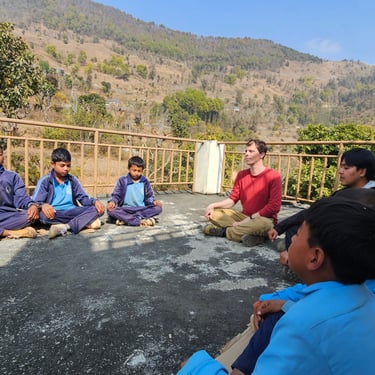
We opened the week by talking about emotions and introduced meditation as a simple way to calm down and deal with unpleasant feelings. We also worked with short stories and asked the children to think about what the characters were feeling in different situations. Later, the class was split into two groups and asked to invent their own stories. These stories had to include the emotions proud, loved, and sad, as well as the words bottle, monkey, and grandfather. One group followed the original story very closely and only made small changes.
During these activities, it became obvious that imagination and creative thinking were difficult for many of the children. In drawing tasks, they often copied earlier examples or repeated exactly what we showed them. As a result, we added extra exercises designed to push them to think more freely, and then asked them to rewrite their stories. The second versions were noticeably stronger and showed more independent ideas.
On Thursday, we ran the first Children’s Club session, which focused on cleaning the school grounds and the surrounding areas. We formed three groups and collected paper and plastic waste in different locations. After the cleaning, we spoke about hygiene and explained why washing hands properly is important, including a short demonstration.
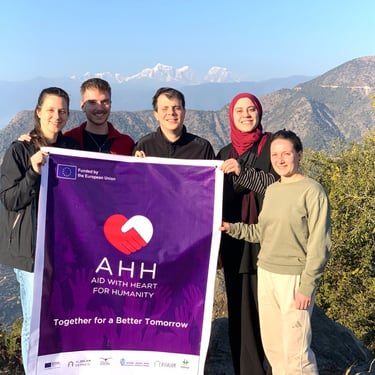
In our free time, a small group of volunteers and I went hiking in Pattale to watch the sunrise over the Himalayan range, with Mount Everest visible in the distance.
Week 6
After the local holiday at Anandeshwor Basic School, we spent four more days there to catch up on the time that was missed. The school deals with a number of serious difficulties. These include limited facilities and materials, but also weak hygiene practices and problems with discipline. Because of this, we chose to concentrate on two main areas: waste management and hygiene with basic healthy habits.
We started with a waste management workshop, based on the one we had already done at Tinpiple School. The students learned how to separate waste, why this matters, and what kind of damage is caused when plastic is burned or buried. Since we could not work with a children’s club at this school and the general situation was different, we adjusted the workshop and kept the methods very simple. For instance, we used a made up story about a plastic monster to explain environmental problems in a way that was easier to follow and more engaging. Throughout the week, it was quite hard to keep the students focused, which was likely connected to the long break before our return.
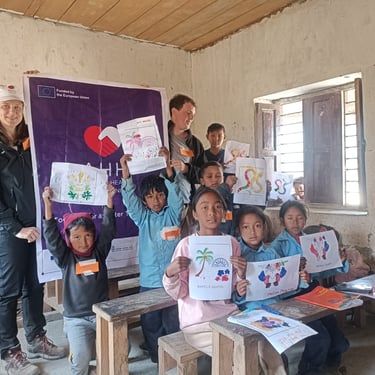
On the next day, we split the class into two smaller groups to improve concentration. We then introduced good and bad habits related to personal hygiene. This included washing hands before meals and after playing, brushing teeth at least twice a day, and wearing shoes in dirty or unsafe places. As creative tasks usually work well with the students, we asked them to draw pictures showing these habits. These drawings are planned to be displayed in the wall magazine.
The wall magazine is a notice board that VIN provides to each school. The idea is that every school has a children’s club that takes care of it and updates it regularly. The club collects drawings, poems, and other creative work from students and arranges them in an attractive way. This gives students the chance to contribute and feel proud of what they have created.
Week 7
This week we only went to school for one day only. It was Anandeshwor and we prepared a small workshop on nutrition. We drew a food pyramid that the children had to complete with our help and reflect on the different importance of Carbs, Fruit and Vegetables, Protein, Fats and sugars. After that, given a week full of public holidays, we took the opportunity with some volunteers to go for a hike in the Himalaya mountains. We did a 4 day hike above 3000 meters. We reached the Dokhundha Lake (4600m), a holy site for both Hinduism and Buddhism. The hike was very difficult. Breathing at that altitude is not easy. But it was worth it. The lake was frozen but very suggestive. We slept in tree houses, managed by sherpa people. We tried new food and saw Everest again. Amazing experience.
Anandeshwor Basic School appeared very simple and not well structured. Most of the students do not wear uniforms. However, the teachers were extremely welcoming and gave us great flexibility in managing our time and activities. In both visits, we focused on drawing and painting activities, encouraging the children to reflect on their homes and families. Through these activities, we introduced basic English vocabulary related to family.
Tinpiple Basic School was more organised and structured. The teachers were also very welcoming, with one in particular being especially supportive and eager to collaborate with us. As in Anandeshwor, we mainly worked with the older students. We assessed their English level through games and activities and worked on strengthening their ability to present themselves in English in a confident and public manner.
We also had some free days during the week. On one of these days, we celebrated Maghe Sankranti, a national holiday, by visiting a large local market.
Week 8
After our trip to Himalaya, we had one last week visiting the schools. Two days each. We decided to focus mainly on sport and publication of the wall magazine. At Anandeshwor, the kids were really happy to play games with us. They really enjoyed themselves. The teachers praised us for our work. We interviewed them with a questionnaire we prepared. On the last day we helped children cut and stick their drawings on bad and good habits on the wall magazine and hung them in the main office. They were very excited and we spent a lot of extra time with them. They performed singing and dances for us, while outside a thunderstorm started. It was magical.
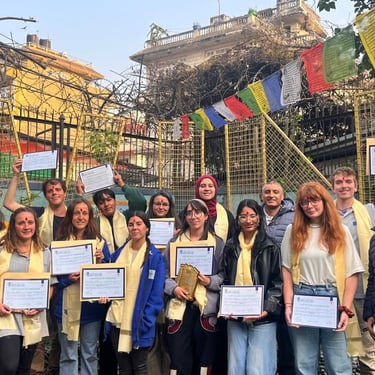
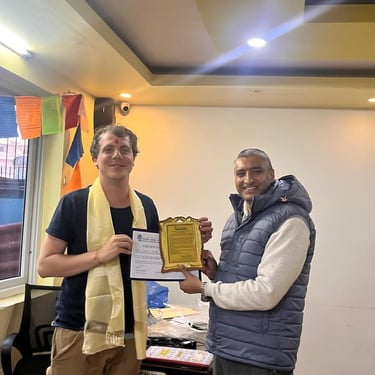
At Tinpiple we had a similar experience with the exception that we had a real and proper exit ceremony where we got tika and the children give us gifts, traditional scarfs and flowers. We danced with them as our last activity. Lots of emotions. The human impact was surely real. I will remember these kids for ever.
Federico
SUBSCRIBE
Subscribe to be updated about latest news and blog posts and to follow what is happening in a magical land of Bali.
Fatma Sümeyye Şahin
Çengelköy, Kalantor Sk. No:6 Üsküdar/İstanbul
Project Coordinator
Address
Telephone
+90 551 256 52 46