

FRANCESCA ISABEL RONDI
Volunteering Experience in Nepal
Week 1
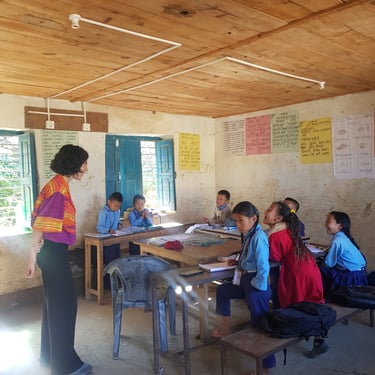
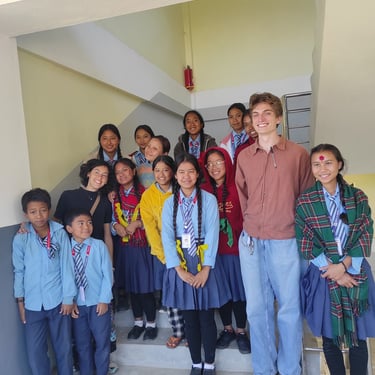
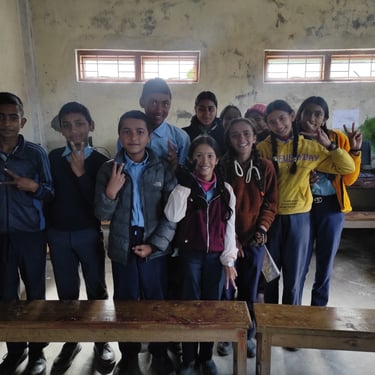
This week marked the beginning of our journey with the six local schools, and it was a week of stark contrasts. Our goal was simple: visit each school, meet the faculty, and assess the status of their Children’s Clubs. What we found was a fascinating spectrum of engagement.
On one end, we have schools like Maheshwor and Himalaya. Maheshwor is modern with a beautiful, active wall magazine, while Himalaya is incredibly disciplined with a proactive club that already organizes weekly activities. On the other end, we faced challenges at Chhatrapragati and Jana Chetan, where the clubs are technically "there" but currently sleeping. At Jana Chetan, we found the teachers more interested in playing chess with us than organizing the kids!
We also visited Kadeni, where the "Suvalo" club has energy but feels dominated by teacher interference, and Raktamala, where the "Navajagrihi" club is active but struggling severely with funding—the members are pitching in their own rupees just to keep it running.
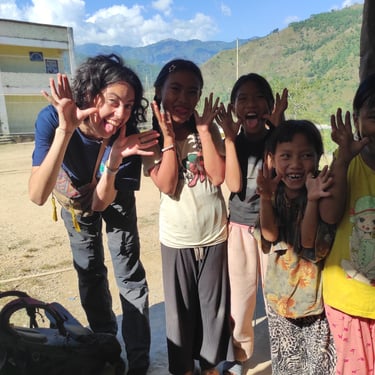
Highlight of the week: Seeing the spark in the students' eyes when we asked what they wanted to do. While many are shy, the universal language of games and sports seems to be our best entry point. We have a lot of work to do to turn these "sleeping" clubs into active bodies, but the potential is undeniable.
Week 2
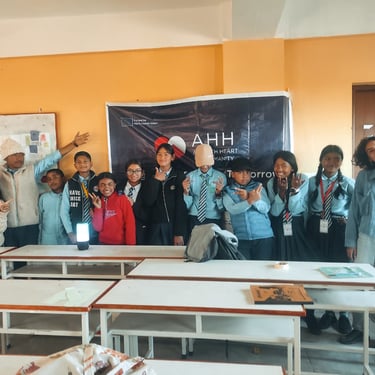
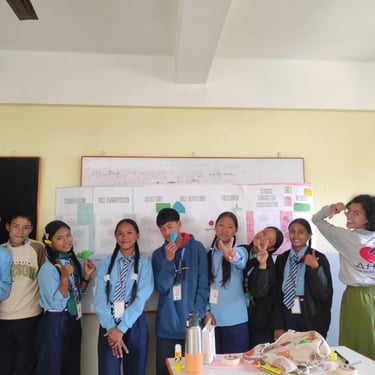
This week was all about moving from observation to action. We focused on two main goals: building empathy through art and establishing clear roles within the clubs.
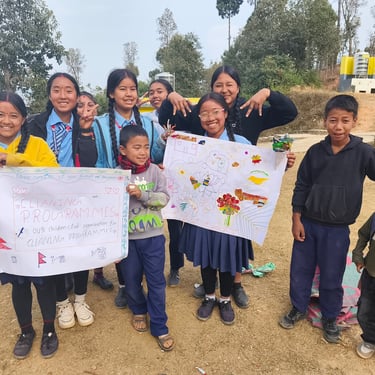
We introduced an activity called "Partner Portraits" across the schools. We paired students up, played some chill music, and asked them to draw each other. It was amazing to see them giggle and connect, especially at Chhatrapragati, where the session ended in an impromptu dance party! We also tackled the structure of the clubs. At Maheshwor and Raktamala, we ran workshops matching "Roles" (President, Secretary, Treasurer) to their "Responsibilities." It was a kinetic game where students had to run around the room to find their matches.
There were some logistical hiccups—at Jana Chetan, we were overwhelmed by a massive crowd of students, making it hard to identify who was actually in the club. However, we celebrated a huge win there: the previously empty Wall Magazine was updated and full of new content when we arrived!
Reflection: We are noticing a recurring theme where the older boys often disengage or dominate, while the girls, though diligent, can be very shy. Finding a balance to ensure everyone’s voice is heard is going to be our next big challenge.
Week 3
If last week was about theory, this week was about putting it into practice. We wanted to see if the clubs could actually run a meeting, not just attend one.
We introduced the "300 Rupee Challenge"—a simulation where we gave the clubs a hypothetical budget and 30 minutes to plan an activity. We acted as "statues" (silent observers) to let them figure it out. The results were eye-opening. At Chhatrapragati and Maheshwor, the students stepped up, with the Presidents and Secretaries supporting each other well. However, at Himalaya, the President adopted a very authoritarian style, ordering others around rather than collaborating.
We also played "Tato Aloo" (Hot Potato) as a rapid-fire quiz to test their memory of the roles. It was a fun way to reinforce the learning, even if the "Service Committee" members at Chhatrapragati needed a little reminder about their duties!
Challenge of the week: Scheduling conflicts. At Jana Chetan and Kadeni, our time was cut short or delayed because of clashes with Chess Club or lessons. It’s a reminder that we are guests in their schedule, and flexibility is the most important skill a volunteer can have.
Week 4
This week we shifted gears from structural training to social awareness. We showed a video about Children’s Clubs in rural Nepal to spark a conversation about discrimination.
The responses were raw and varied. While students at Maheshwor and Jana Chetan hesitated to admit to discrimination in their personal lives, the students at Himalaya were incredibly brave. They opened up about bullying and bias from teachers based on academic performance—the idea that "best students" get treated better than "basic students." It was a heavy but necessary conversation.
To turn this awareness into positive action, we pivoted to planning a real-world project: The Winter Mela (Market). We proposed a Community Market for December 25th where clubs can sell goods to raise their own funds. This idea lit a fire under them! We started brainstorming session—Raktamala wants to sell Pani Puri, while other schools are looking at vegetables and crafts.
Week 5
Planning for the Mela is in full swing, but this week proved that school life is never predictable. Attendance was spotty across several schools because many of the teen boys were away at a Volleyball competition in Moli.
At Chhatrapragati, we also lost some members to a conflicting Informatics class, but the remaining three members (Bhuban, Anita, and Narayan) came up with some wild creative ideas—selling traditional pins and recycled bottle art! We had to gently guide them toward more "sellable" basics like vegetables to ensure they make a profit. At Kadeni, the girls struggled to make decisions without the boys present, highlighting the need to boost their confidence in decision-making.
Despite the absences, the "seed fund" concept is clicking. They understand that this isn't charity—they have to plan a budget, buy materials, and earn a profit. It’s Entrepreneurship 101, and they are taking it seriously.
Week 6
This week was a test of the clubs' independence (and ours!). With Francesca away in Kathmandu for visa renewal, Manisha visited the schools solo.
The focus was purely on Budget Alignment. Each club had to finalize exactly what they are buying and how much it costs. It was a crucial step to move from "we want to sell everything" to "we can afford to buy ingredients for Chatpate."
It wasn't all business, though. At Jana Chetan, the planning session turned into a celebration for their English professor's birthday. It was a sweet reminder of the community bonds that exist here. The clubs are now aligned, the product lists are set, and the excitement is building. Next week is the big game!
Week 7
We did it! After weeks of training on roles, budgeting simulations, and planning, everything culminated this week
The early part of the week was spent going class-to-class at Raktamala and Maheshwor, inviting teachers and students to the event. The anticipation was electric.
On the 25th, the CLC Winter Mela finally happened. Seeing the students transform from shy participants into confident stall-owners was the highlight of my entire two months here. Clubs that previously had zero budget (like Raktamala) were suddenly managing money, shouting out marketing pitches for their Pani Puri, and calculating their profits.
The event wasn't just about money; it was about visibility. The community saw these children not just as students, but as capable organizers. We proved that with a little structure and trust (and a small seed fund), these Children's Clubs can be powerful engines for their own development. It was the perfect way to wrap up the year.
Week 9
Chhatrapragati was the only school to hold a session this week, diving deep into their Post-Mela Debrief. They experienced an emotional journey from extreme anxiety—fearing no one would buy their non-food items—to immense pride after realizing they secured the highest profit. Their late-night grind making pins and their smart "gifts for love" marketing tactic paid off. They also showed incredible maturity in their observations of other clubs, noting Maheshwor's cleanliness and critiquing Himalaya's hygiene and leadership.
Week 10
Post-Mela debriefs continued, revealing very different experiences.
Maheshwor students were thrilled with their success, expressing that they were "very happy" with the outcome. They showed high emotional intelligence, expressing concern for the heavy responsibility carried by the volunteers during the event. Later in the week, they successfully shifted focus to planning a massive school-wide cleaning program and shared a touching farewell with volunteer Martin.
At Jana Chetan, the mood was distinctively different. They acknowledged being the "worst" performers. The debrief highlighted internal fractures, unequal workloads where one member felt "left alone," and absenteeism. Despite this, the students were lighthearted, laughing and giggling throughout the meeting.
Week 11
Raktamala reflected on their Mela performance with a strong sense of team spirit. While they were very happy, they demonstrated critical business thinking by identifying a major pricing error: they sold their Chatpate for only 30 NPR, missing out on potential profits.
Himalaya faced a harsh reality check. Their reflection was heavy due to the pressure of an 825 NPR debt. A lack of teamwork, late arrivals, and poor planning by their President (Eric) led to a chaotic day. To help them recover, we proposed selling food at an upcoming chess tournament.
Jana Chetan was stuck in a leadership crisis, functioning without a president for a month because no student wanted to step up. To combat their shyness, we played the "Whisper Game," which successfully broke the ice and generated lots of laughter.
Week 12
This week was heavily focused on introductions as new volunteer Minas joined the team.
At Raktamala, we reviewed governance and found the school environment to be clean, but their Wall Magazine was unfortunately locked away in the library due to past thefts.
Himalaya hit a crisis point. Deeply traumatized by the Mela failure, four members raised their hands to quit. We proposed restructuring and new elections, but the teacher blocked the initiative.
Jana Chetan finally elected a new President from Grade 9 via secret ballot, and the new leadership immediately secured the Headmaster's permission for a cleaning program.
Kadeni re-engaged with us after a long gap. We made a key discovery: the students manage toilet cleaning themselves on a three-day rotation!
Week 13
This week was heavily focused on introductions as new volunteer Minas joined the team.
At Raktamala, we reviewed governance and found the school environment to be clean, but their Wall Magazine was unfortunately locked away in the library due to past thefts.
Himalaya hit a crisis point. Deeply traumatized by the Mela failure, four members raised their hands to quit. We proposed restructuring and new elections, but the teacher blocked the initiative.
Jana Chetan finally elected a new President from Grade 9 via secret ballot, and the new leadership immediately secured the Headmaster's permission for a cleaning program.
Kadeni re-engaged with us after a long gap. We made a key discovery: the students manage toilet cleaning themselves on a three-day rotation!.
Week 14
At Maheshwor, Manisha was absent, so we pivoted to a practical "Trash to Art" activity for Chocolate Day. The kids showed great dedication to their environmental goals, choosing to make posters for their cleaning program over Valentine's crafts.
Kadeni successfully executed their Toilet Cleaning Workshop! We provided brushes, soap, masks, and gloves. We taught them crucial hygiene habits, like pushing excess water out to dry the floors and prevent bacteria.
Himalaya's newly formed club had its first meeting, focusing on waste degradation. President Eric stepped up beautifully to translate the entire session.
Chhatrapragati achieved a 100% full quorum and had a great waste degradation workshop, actively asking questions
At Jana Chetan, students were occupied with a dance competition, so we simply joined the audience to support them.
Week 15
Maheshwor finally executed their cleaning program, but again, the collected trash had to be burned due to a lack of alternatives. Some students showed disinterest and tried to avoid helping.
Raktamala faced teacher resistance regarding their Wall Magazine board, so we adapted and created a DIY poster outside. Sustainability is a major concern here, as they rely entirely on our materials.
Himalaya proudly unveiled a beautiful, completely new Wall Magazine. We also introduced the concept of English debates. Despite significant hesitation about the language, they boldly voted to debate "Women in Power" and "Love vs. Arranged Marriage".
Chhatrapragati's session was abruptly cancelled without notice, so we pivoted to observing their quiz competition.
Week 16
Manisha and Francesca were on leave this week, leading to some adaptations in the field.
At Raktamala and Maheshwor, Minas prepped the students for their upcoming debates. Raktamala conducted a secret vote where "Women in Positions of Power" won (despite one girl trying to cast a double vote!). Maheshwor finalized "Love/Arranged Marriage".
Himalaya actually conducted their debate. Unfortunately, teams didn't prepare properly, and the session consisted mostly of expressing opinions without solid arguments or counter-arguments. We provided constructive feedback to help them grow.
At Jana Chetan and Kadeni, the lack of a proper interpreter led us to pivot entirely to educational sports. We conducted football training sessions to foster teamwork and communication through play.
FRANCESCA ISABEL RONDI
SUBSCRIBE
Subscribe to be updated about latest news and blog posts and to follow what is happening in a magical land of Bali.
Fatma Sümeyye Şahin
Çengelköy, Kalantor Sk. No:6 Üsküdar/İstanbul
Project Coordinator
Address
Telephone
+90 551 256 52 46