
GAEL FERREIRO GARCÍA
Volunteering Experience in Togo
Week 1
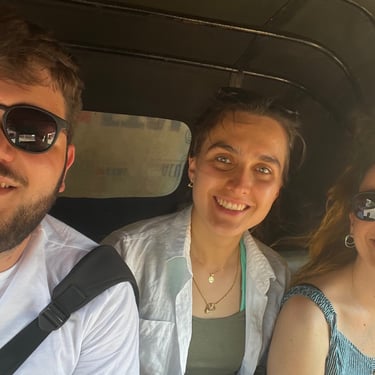
We arrived in Lomé in the early hours of March 5th, specifically at 2:35 AM. It was a long journey; the three of us Spanish volunteers met at Barajas Airport, flew to Casablanca, and finally made it to Togo. After passing through immigration and picking up our bags, we felt the first true culture shock—the climate and the atmosphere of the country hit us, but we were filled with excitement for what was to come.
We were picked up at the airport by members of the association who accompanied us to our accommodation. After some much-needed rest, the following days were spent settling in and handling the initial logistics: getting a SIM card, exchanging money at the bank, and starting to understand how day-to-day life works here. The next day, we met the rest of the people from the association we’ll be working with over these two months. It was a very positive first contact; we had a meal together, introduced ourselves, and were given a necessary orientation about the country. Even though it was a short week, it was quite intense and fun.
Over the weekend, we took the opportunity to explore the city and its markets, and we had our first "reality check" with the common power outages. Since our house's water pump is electric, the blackout left us without water. But as life always has its ups and downs, this led us to discover the incredible sense of community in our neighbourhood. As soon as we asked the neighbours if this was normal, they offered us water from their own homes so we wouldn't go without. That gesture really helped us connect with our surroundings.
We also had time to see the beach in Lomé and meet local people who showed us different sides of the city. It has been a very complete first week (well, technically 4 days) that has helped us adapt and start integrating into the local rhythm. There is no doubt that the coming weeks will only bring us more surprises, experiences, and learning.
Week 2
After our first week of settling in, these past few days we’ve fully integrated with the 4B team (Building Bridges and Breaking Barriers). This area works directly with young girls and teenage mothers living on the streets of Lomé’s beach, so the pace has been intense from the very start.
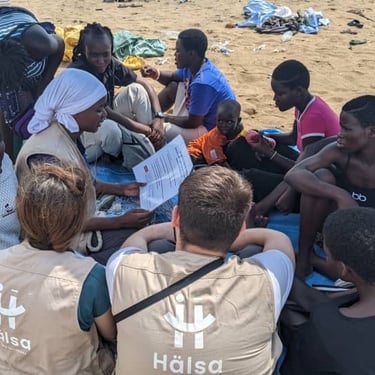
Our first mission was to head to the beach to meet them personally and conduct a maraude. We were basically registering data and scouting the area to identify potential new beneficiaries for the project. It was a direct, eye-opening contact with their reality (one so strikingly different from what we know in Europe). It really highlights how deeply rooted social injustice is and why the work these organizations do is so vital.
We also dedicated a very interesting session to raising awareness about gender-based violence and equality. It was truly revealing to hear their perspectives and points of view (sometimes surprising in their differences, yet so incredibly helpful for understanding their outlook on life). Of course, there was no shortage of playtime with the young mothers' children, who always greet us with incredible energy the moment we step onto the beach.
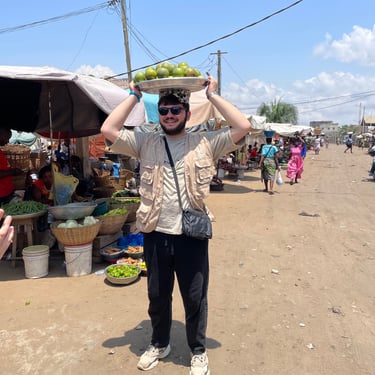
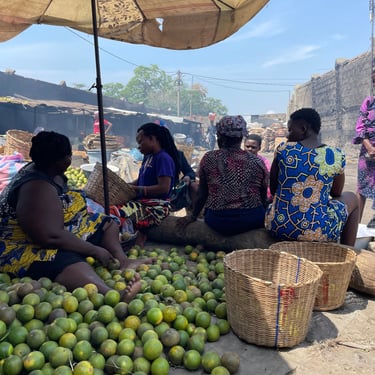
One of the most exciting parts of the week was launching a pilot entrepreneurship project. We accompanied several girls and provided them with the necessary materials to start selling oranges as street vendors in the Grand Marché of Lomé. Accompanying them through this process was a powerful experience; we got to see how the market works from the inside and, above all, understand the real opportunities these girls have to get ahead and improve their financial situation. For me, it was especially moving to see how the girls, despite coming from such difficult circumstances, wore their best clothes and brightest smiles, ready to shine on their first day of "work."
But it hasn't been all work; we've also had time to continue discovering the contrasts of this country. During the week, we enjoyed cultural activities like going to the cinema, and over the weekend, we took a much more profound trip:
We visited Togoville, a sacred village on the shores of Lake Togo where Christianity and Voodoo animism coexist, alongside remnants of the country's colonial history. It was a very special experience; we crossed the lake and explored both the places of worship and the local crafts. We also visited Agbodrafo to see the "House of Slaves." It is a site with a heavy historical weight, fundamental for understanding the history of slavery, the Négritude movement, and the roots of Voodoo culture in the region.
These have been days of deep emotional and cultural learning. We feel more connected to the rhythm of life here with each passing day, and to the impact, however small, that we strive to generate through our work. As a team, we have begun to share more experiences, which helps us build a stronger bond between us. We keep on going!
Week 3
This third week in Lomé brought a change of scenery as we integrated with the École Alternative (Alternative School) team. This project has allowed us to get closer to a different reality: that of children living on the streets.
Our work took us to different parts of the city where these groups of children often gather. During one of these encounters, we organized a more recreational day, combining sports with awareness-raising activities regarding the violence they face in their daily lives. It was a different way to connect with them, stepping into their world and earning their trust through play.
Getting to know the history of the children in this community has been eye-opening. Contrary to what one might think, not all interactions among people in this situation are hostile; these kids have built a group based on mutual aid, sharing the little money they earn if one of them falls ill and looking out for one another. They possess human values from which we undoubtedly have a lot to learn.
We spent the rest of the days at the school’s headquarters, located in the Djena area, right next to the Ghanaian border. There, working with the children and adolescents, the work was more consistent: from computer workshops to help them familiarize themselves with the keyboard, to painting sessions and games. For me, the painting workshops were undoubtedly the most special; seeing how they poured themselves into their art allowed us not only to discover their creativity but also to better understand their personal stories. It is a harsh reality, different from the one we saw last week with the young mothers, but just as necessary to make visible.
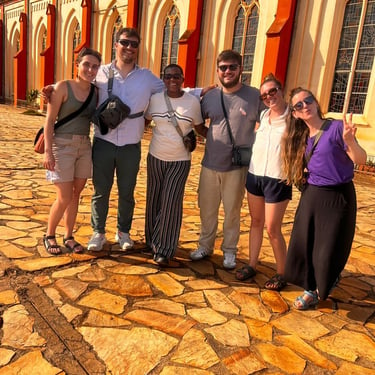
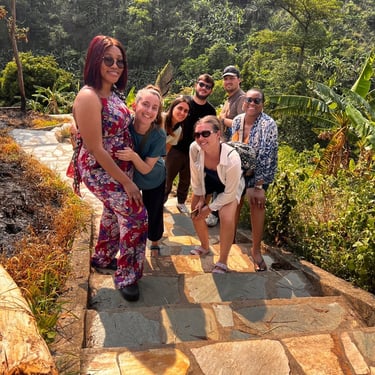
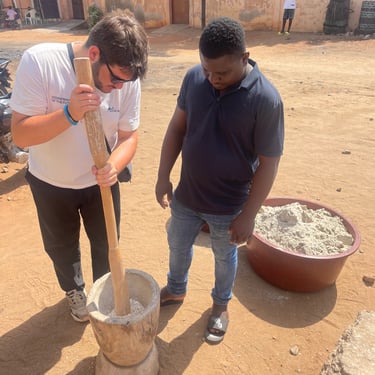
Outside of our volunteering routine, we have continued to deepen our understanding of Togolese culture. In our free time, we were able to visit the Fetish Market in Lomé, which helped us understand a bit more about the roots of Voodoo. Additionally, we were lucky enough to have some colleagues from the association accompany us to Kpalimé, about two hours north of the capital.
It was a total change of scenery: we left behind the hustle and bustle of the city to head into a much more lush, green, and jungle-like area. There, we discovered spectacular waterfalls and remnants of the colonial heritage in a community where the connection to nature and the abundance of fresh fruit set the pace of life. It has been a week of total contrasts: from the harshness of street work to the serenity of the Kpalimé jungle. With each passing day here, this country reveals a new facet to us.
Week 4
This fourth week, we rejoined forces with the 4B team, focusing our efforts back on the beach. Our main objective was twofold: to continue supporting the young girls and teenage mothers in their day-to-day lives, and to conduct a real-world follow-up on the orange-selling pilot project we launched two weeks ago. While it is difficult to expect perfect financial skills from people in such a vulnerable situation, the results were not entirely negative. This allowed us to reflect on the possibility of implementing some money-management training to ensure the sustainability of the entrepreneurship project.
However, our work did not stop there. We expanded our area of operation, reaching new neighbourhoods in Lomé. After receiving authorization from the local neighbourhood chief—an essential protocol for working here with respect—we began registering new beneficiaries in need of support. Furthermore, we ventured into one of the most challenging parts of the city, locally known as the "Hôtel La Paix." There, we organized bracelet-making workshops using plastic threads and colourful beads.
The response was spectacular: the girls truly embraced it, showing a creativity and interest that surprised us all. It was a moment of total connection; having their hands busy with beads and thread made the atmosphere much more relaxed. The girls opened up, and we were able to listen to their stories in a way that is often difficult to achieve in more formal settings. The success was so significant that we are already planning how to replicate this activity in the coming weeks at all our locations.
Outside of work, the last few days have been about celebrating our time together. We’ve had the chance to immerse ourselves in Togolese culture, from discovering the nuances of the local cuisine to letting ourselves be carried away by the music of Lomé. As a gesture of affection and gratitude toward those who are hosting us, we organized a small party-meal for all the members of the association. It was a very special moment to strengthen bonds with the team that makes our presence here possible.
Looking back, these four weeks have been a constant learning process: seeing what works and what doesn't, what we are interested in working on or teaching, and, above all, what we can learn from this entire experience—from the environment, from our colleagues, and from the beneficiaries themselves and their life stories. We have come to realize how many things we take for granted in our lives in Europe that are not, in reality, guaranteed for everyone. We are learning to value them much more for when we return home.
Week 5
This week brought a new shift, as I got to know the third and final project that Hälsa is carrying out during this period: Panier du Cœur (Heart Basket), an initiative that manages the collection of food from partner bakeries and restaurants to redistribute it among our beneficiaries. Furthermore, we are promoting an agricultural project on land ceded to the association: the goal is for the beneficiaries to be able to sell the produce grown there, thus improving their financial autonomy.
It has been a week of total contrasts. Between managing the garden and holding meetings to find new partners for Panier du Cœur, we had to take a break to handle some bureaucracy, such as renewing our visas. However, the most surprising moment came with a very special invitation: we had the honour of meeting with the European Union Ambassador to Togo, Mr. Gwilym Jones. It was a unique opportunity to see up close how cooperation and humanitarian aid are managed from an institutional perspective in the country, in addition to gaining a different insight into its internal challenges and the development expected in the coming years.
The highlight of the week, without a doubt, was launching the École Mobile (Mobile School). It is a brilliant concept: transporting educational materials to different neighbourhoods in Lomé to bring non-formal education to children wherever they may be. The experience was beautiful. As soon as we set everything up in the neighbourhood, dozens of children arrived eager to learn: we jumped from math to geography, and from there to language or English, focusing on whatever sparked their curiosity. It was incredible to see how education can travel and adapt to every corner of the city, and how, despite not coming from a formal educational background, these children possess an unexpected curiosity for anything we offer to teach them.
Culturally, we continue to deepen our understanding of local traditions. We had the opportunity to experience a very curious festival centred on Ayimolou (a dish of rice and beans), which has already earned a permanent spot in our diet and is a fundamental part of local identity.
Each passing week, I realize that this volunteering experience is a puzzle of very different pieces: from high-level diplomacy to the simplicity of a math class improvised under a tree in a city neighbourhood. Just like life itself, the simplest moments can contain a complexity that escapes the eye, and those that seem high-level can surprise us with their simplicity. You learn from everything and everyone, and it is precisely in that mix that the true lesson of this experience lies.
Week 6
This sixth week has been, above all, a week of connections. We returned to work alongside the École Alternative team, but this time with some very special guests: a French association that also works with vulnerable children. Two educators and three young people came to see our work and the impact Hälsa is generating here in Togo firsthand.
The day began with our usual routine: sports and awareness-raising activities, but this time with a different nuance. Bringing together two such different realities (children from France and children from Togo) we were able to see that, even if the contexts change, vulnerabilities often share similar roots. The great difference lies in the fact that, in Europe, we are lucky to have social support that can often cushion those blows—a safety net that, unfortunately, is often non-existent here.
The most magical part of the week was watching them share the same space. On the beach, we let the language of music take the lead. Without the need for words, the children taught us how to play the djembé and follow the beat of African dances. They have a sense of rhythm that truly takes your breath away. In addition, we carried out a joint art project where, on a shared canvas, the children from both countries expressed their worlds. It was a lesson in mutual learning that reminded us that, in the end, childhood speaks the same language everywhere on the map, no matter what circumstances it faces.
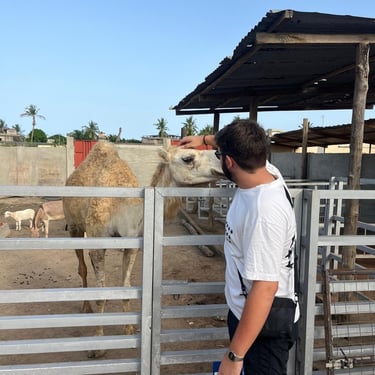
Culturally and recreationally, we continued to explore very different facets of Lomé. We visited an animal rescue centre, where we were able to see some of the local wildlife, and thanks to an invitation from a colleague, we experienced one of the most authentic things you can do in Togo: attending a local league soccer match. It was a true sociology lesson; seeing how soccer is experienced here teaches you more about the culture, the passion, and the community spirit of the Togolese people than any history book ever could.
This week has left me with a clear feeling: the value of unity. When we connect two different worlds and have them paint, play music, or play together, the barriers simply disappear.
GAEL FERREIRO GARCÍA
SUBSCRIBE
Subscribe to be updated about latest news and blog posts and to follow what is happening in a magical land of Bali.
Fatma Sümeyye Şahin
Çengelköy, Kalantor Sk. No:6 Üsküdar/İstanbul
Project Coordinator
Address
Telephone
+90 551 256 52 46