

HECTOR JIMENEZ
WEEK 1
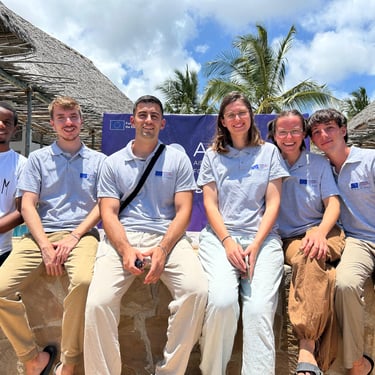
These first days at Assalam have gone very fast. The main reason being that we haven’t stood still for a minute, and that everything is new for us. The environment is totally different from anything that I have experienced before- Being the first time that I live in an environment so “underdeveloped”, there are many challenges that you don’t find in the comfort of the “developed West”. But this is a part of the reasons that brought me here. A different environment induces you to rethink all your previous assumptions. Receive and give what you can.
On these first days we were participants of very different activities, and already took roles to help in the local organization. Having just arrived, we helped distribute compost in a new garden in order to establish good foundations for when it’s planted. A very physical but rewarding task. Later on, during the week we had meetings to set clear our roles in the organization. In these first days, together with Matteo, I’m helping with the story-telling for the “Spice Route Museum”, one of the main social enterprises that the local organization, Assalam, has established in order to help them with funding.
Volunteering Experience in Tanzania
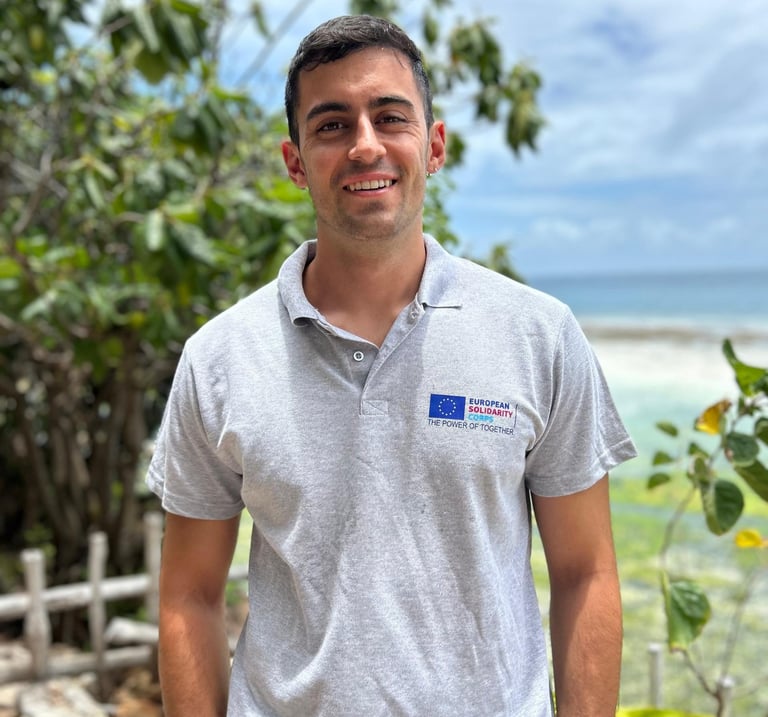
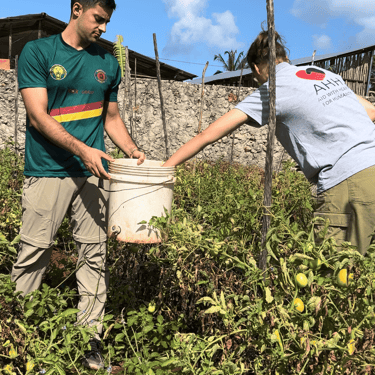
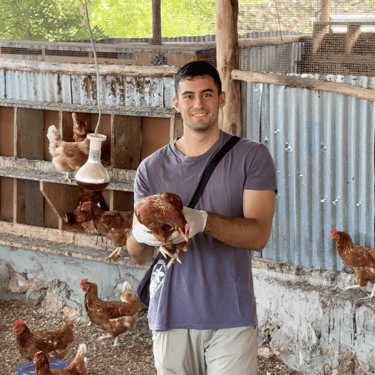
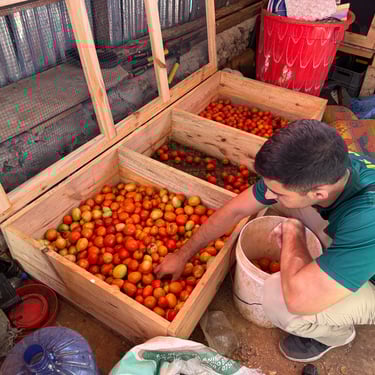
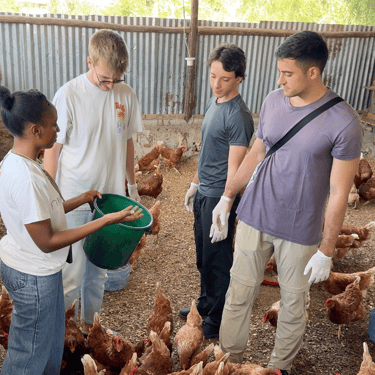
Apart from this main activity, we are taking regular swahili classes, to take it a bit further than “jambo”! Also, we are aiding in the permaculture side of the organization. We have harvested eggs, collected tomatoes, milked a cow, and helped in creating a natural product that acts as fertilizer, herbicide and pesticide, called worm tea. Very interesting. Today, there’s a school competition with the theme of STEM on Assalam facilities. It’s great to see the direct impact of the programs developed by the local organization and others.
I’ll keep updating this post regularly with the different activities that I carry out!
WEEK 2
This second week, in my assignment on the Social Enterprises of the organization I have continued to develop the storytelling of the Museum, finishing the first floor. It has been very interesting to learn more about the importance of the spices through History, and how they were an integral part of the developings in Zanzibar. As a History enthusiast and somebody building my career interlinked with International Business, I think Zanzibar has a lot to offer in this regard. Apart from this, we continued participating in permaculture and swahili classes.
On Friday, we had the great chance of attending the wedding of Simba, one of the drivers of Assalam. It was a very cool cultural experience to see how in this land something as important as marriage is carried out. Apart from the week per se, on the weekend me and some other volunteers had the chance to discover another part of the island, Paje. Although you may think that the island is not big, I can assure you it has a lot to offer, and I’m sure that in two months we won’t have enough time to see all of it.
I’d also like to share a brief reflection about an experience we had related to food safety — specifically, a case of scombroid poisoning. It’s a reminder of how important proper food handling and storage are, especially in environments where resources are limited. Although the organization does many things well and we feel generally supported, this incident highlighted areas that could be improved to ensure everyone’s well-being, and actually they already told us about arrangements they made so it didn’t happen again. Sharing this is not meant as criticism, but as an opportunity to keep learning and strengthening what already works, so that future volunteers can have an even better experience.
WEEK 3
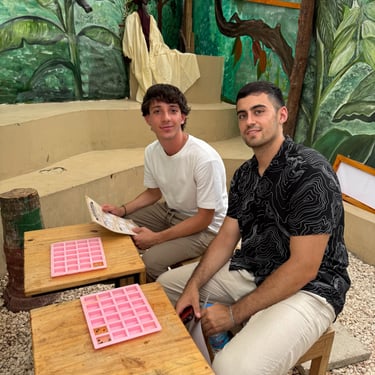
This week we already started with the school clubs, which I loved a lot. The organization asked us about our preferences, and I picked the chess club. I think it’s great to teach the children chess. It’s such good brain training, while having fun. Apart from that, we continued our activities in the social enterprise side of the organization, swahili classes, and permaculture. One of the days this week I had the chance to do some permaculture activities with some kids of the school, which was really cool as well.
A special event that happened this week in the campus was the visit of a high school. The purpose was to get an introduction to different professions that are taught here, to possibly ignite a spark of interest in them. It was very interesting to see this different kind of impact that Assalam has in the communities here in Zanzibar.
On the weekend I finally pursued one of my dreams here: dive in these waters and get a certification from a diving center. It was an amazing experience and, luckily, I didn’t have to go very far from the foundation, since just nearby in Kizimkazi there’s a pretty good diving center with which I could pursue this interest of mine.
To end with, next week there are general elections here in Tanzania. It’s a big event and some precautions have been taken, like for example the school will be closed for the week. As somebody interested in politics and international relations, it’s an experience to live this date. Although we are also taking measures to take these days easy, it’s true that there’s a sense of uncertainty from what can happen. I guess I’ll update on next week’s post.
WEEK 4
This week has been marked by the general elections that took place nationally in Tanzania on the 29th of October. They were marked by very undemocratic circumstances, with the main opposition party, Chadema, prohibited to participate, and all serious opposition leaders banned to race, jailed, or worse. Therefore, the party that has been ruling this country since independence in 1961 retained power, and its leader, a Muslim woman, has been elected president with almost 100% of the votes. Meanwhile, a nationwide internet blackout has taken place, resulting in that we had no internet from around 12 am Wednesday 29th until yesterday night, Monday 3rd of November. That’s a total of 6 days. Everything that we knew from what was happening in the country came from drops of information from the staff at Assalam. That’s how we heard of the protests in mainland Tanzania and the deaths of allegedly hundreds of people in the hands of the government. In Zanzibar it was okay, with only the capital of the archipelago with a strong police presence. We were advised by the staff to take these days easy and avoid or limit going out of the facilities. In Kizimkazi I only witnessed some minor police presence, and the celebrations of the people when the president-dictator was sworn in.
Not everything has to be normalized. This week has made me realise very deeply how important democracy is, how lucky we are in Europe for our freedoms (which can be improved, but which are sadly rare in the world), and how we cannot take these for granted, being everyone's responsibility to protect and expand our democracies. So we don’t end up like Tanzania, a beautiful country with great people, but with the same or less democracy than Russia, as a fact.
In the course of the week, I used my time to finish my assignment on the creation of the storytelling for the guided tour of Assalam’s Spice Route Museum. On Sunday, we had in the middle of the blackout a very intense but fulfilling day, as the organization hosted an Orphan Festival, which is a day in which Orphans (also Social Orphans) from different villages come to Assalam for a day of games and activities. The EU volunteers were divided and put in charge of a group of kids. At the end of the day I was tired but content, because it’s for these days that I made my trip all the way to Zanzibar.
WEEK 5
This week everything went back to normal, as if nothing had happened. Some international condemnation of the undemocratic process and the deadly repression of protests, but soon all advice against traveling was lifted and business was back on track. As for life on campus, I finally presented my work on the Museum’s storytelling to my supervisor, who was very pleased with it. Later on, I got other tasks, such as writing an article for LinkedIn talking about the work that is done by Assalam to link education and permaculture. I finished it by the end of the week. Meanwhile, I continued with my other tasks in School Club and with the swahili lessons.
HECTOR JIMENEZ
SUBSCRIBE
Subscribe to be updated about latest news and blog posts and to follow what is happening in a magical land of Bali.
Fatma Sümeyye Şahin
Çengelköy, Kalantor Sk. No:6 Üsküdar/İstanbul
Project Coordinator
Address
Telephone
+90 551 256 52 46