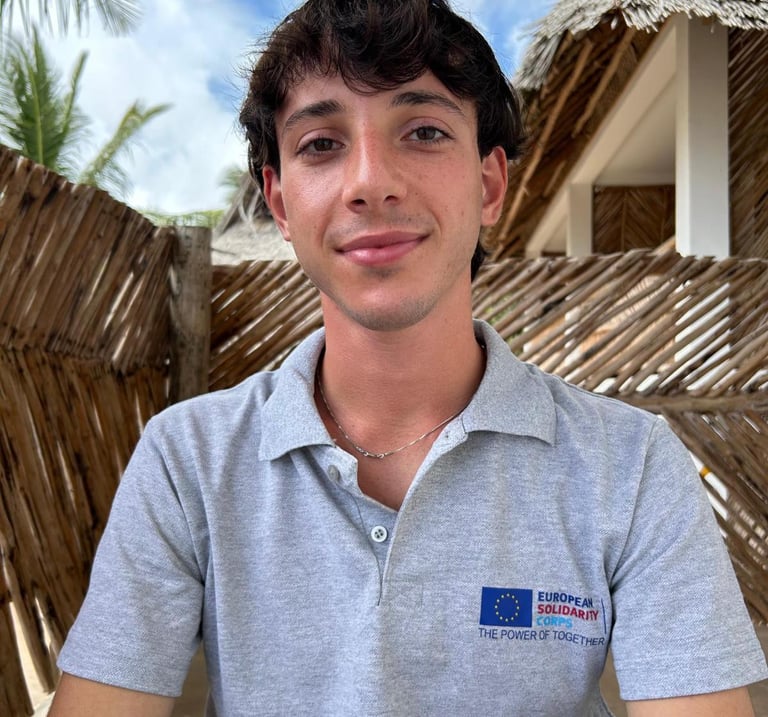
MATTEO TORALDO
First Week
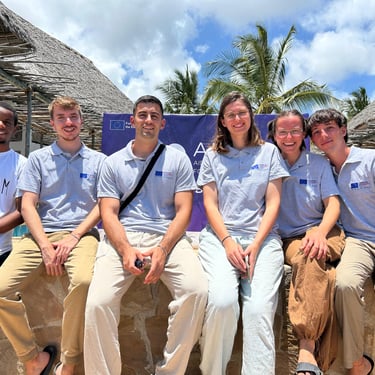
My first week in Zanzibar has been a mixture of orientation, exploration, and initial steps into our volunteer activities. After a long intercontinental flight, the first few days were mainly dedicated to settling in, meeting the other four volunteers and familiarizing ourselves with the campus and the nearby village. We spent time exploring the area, visiting the beach and interacting with the local community to get a sense of the environment we’ll be living and working in.
We also started attending several meetings with the program coordinators to discuss and identify our core activities and additional group activities for the weeks ahead. This helped us understand how we could contribute most effectively to the program and the community.
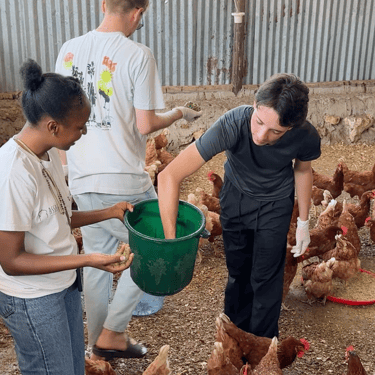
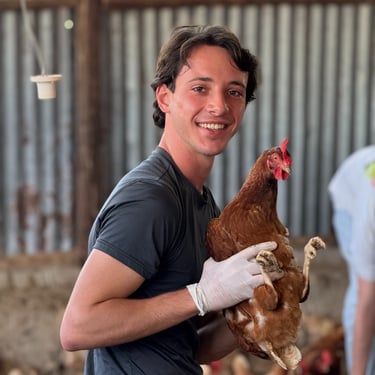
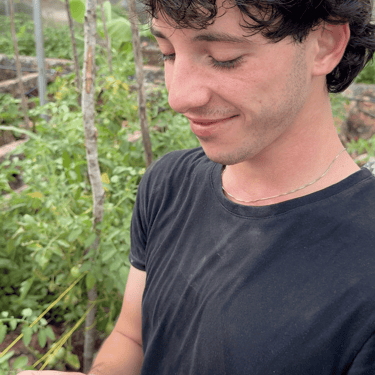
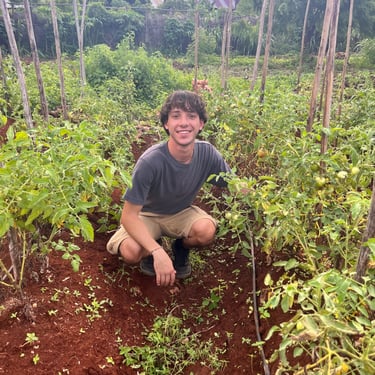
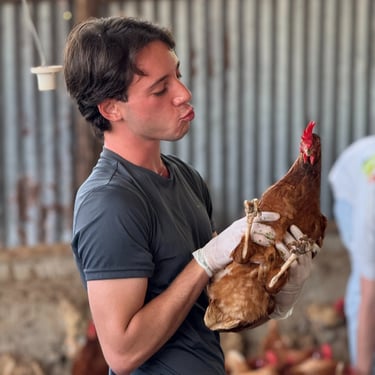
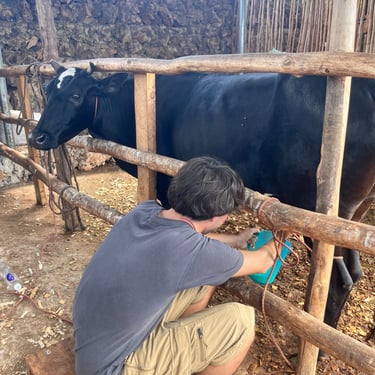
Starting Monday, our mornings have been dedicated to permaculture tasks. These include collecting eggs, milking a cow, feeding animals, preparing compost and harvesting vegetables, like for example tomatoes and peppers. After brunch, we have daily Swahili lessons, which are helping us communicate better and build stronger connections with the local community.
Volunteering Experience in Tanzania
Second Week
Our second week in Zanzibar has been both productive and full of new experiences. We’ve now settled into a rhythm and the days are starting to feel more structured. Every morning, we continue with our permaculture activities, working in the greenhouse, the vegetable garden and the farm. Collecting eggs, feeding the animals, composting and harvesting vegetables have become part of our everyday routine. It’s hard work sometimes, but it feels meaningful to contribute to the self-sufficiency of the campus.
Tuesday was Nyerere Day, a national holiday in Tanzania dedicated to Julius Nyerere, the country’s first president. Since it was a day off, some of us volunteers took the opportunity to explore the island. We went to Mtende Beach, a beautiful and rather unique place that can only be reached during low tide. We spent the day swimming and snorkeling in crystal-clear waters surrounded by cliffs and coral reefs, it was truly one of the most stunning places I’ve seen here. On the way there, we also stopped to see one of Zanzibar’s oldest and largest baobab trees, said to be almost a thousand years old.
Back on campus, Hector and me continued developing our storytelling project for The Spice Route Museum in Stone Town, focusing on creating content to better communicate the museum’s story and identity. Later in the week, we met with our coordinator, Mohamed, who gave us feedback and suggestions on how to improve and move forward with our work.
Friday was a particularly special day: we were invited to the wedding of Simba, one of the campus staff members. The ceremony took place in Paje and was a wonderful chance to experience a traditional Muslim wedding and learn more about local customs. Finally, some of us volunteers stayed in Paje for the weekend to relax, enjoy the beach and even try kitesurfing: a great way to end the week, surrounded by the ocean and the energy of the island.
Overall, this week has been a perfect combination of work, discovery and cultural immersion. Each day brings something new to learn and I’m starting to feel more connected, both to the project and to the rhythm of life in Zanzibar.
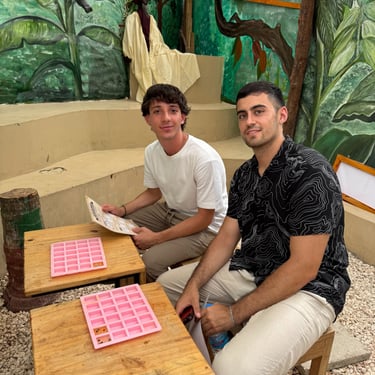
In the afternoons, we focus on our specific projects. Specifically, I have been assigned, together with another volunteer, Hector, to work on managing the Spice Route Museum in Stone Town. That’s why we began the week with a field visit to the museum to meet the staff, learn about its operations and understand how it functions before we can start contributing more actively to the project
Overall, this first week has been a valuable time to adapt to life in Zanzibar, get to know the people and surroundings, and begin the practical work that will define our volunteer experience. I’m excited to continue learning, engaging with the community and contributing to the projects in the weeks to come.
Third Week
Week three started on a high note, as Monday we had a double celebration, my birthday and Huma’s. In the evening, everyone gathered to celebrate together. We shared food, had two homemade cakes with candles, and danced to music late into the night. Afterwards, some of us stayed on the beach to watch the stars: the perfect way to end such a joyful day.
The rest of the week followed our usual rhythm: mornings dedicated to permaculture work in the garden, greenhouse, and farm, and Swahili lessons after brunch. One of the new activities this week was the school club of pottery, where Claudia, another ESC volunteer, and I tried our hands at making cups. It was fun, messy, and surprisingly relaxing, a creative break from our daily routine.
During the week, Mohamed, the coordinator of the social enterprises, gave me a new task: creating flyer designs for The Spice Route Museum to promote it among hotels and tourist spots around the island. I was happy to take it on, as it gave me the chance to brush up on my Canva design skills and contribute to the museum in a more visual and practical way.
Some afternoons we went to the beach to unwind, swim, or simply enjoy the sunset. One evening, together with Nagla and some of the new volunteers who had just arrived, we organized a volleyball match. Most of us weren’t exactly experts, but it turned out to be great fun and a good way to bond as a group.
The week ended on an amazing note: on Saturday, a few of us went on a trip to Uzi Island. We explored the mangroves by kayak, paddling through narrow channels surrounded by lush greenery until sunset. It was a beautiful and peaceful experience, the kind that makes you realize how unique and diverse Zanzibar truly is.
Fourth Week
This fourth week has been very different from the previous ones since marked by tension, uncertainty, and sadness due to the elections taking place in Tanzania. The first few days were relatively calm, but there was a general feeling of anxiety in the air, as we had been told that the situation might become unstable. The school was closed, many members of the staff decided to return to their homes, and some volunteers even left the country temporarily. As a result, most of our usual activities were suspended, and the atmosphere around the campus became unusually quiet.
Soon after, the internet connection was completely shut down across the country. We had been warned that a temporary blackout might occur, so at first we didn’t worry too much. However, as the days passed, it became clear that this was not a short interruption and the blackout lasted the entire week. Without access to the internet, messages, or calls, we were completely cut off from the outside world and unaware of what was happening on the mainland.
Only later did we learn about the violent protests, the curfew, and the tragic loss of hundreds of lives. It was shocking and deeply saddening to realize what the country had gone through while we were isolated here.
During those days, with all work suspended, we spent most of the time at the beach, trying to make the best of a difficult situation. Personally, I took the chance to read several books from the Assalam library, it was a peaceful way to disconnect and reflect amidst all the uncertainty.
On Saturday, we joined the Safari Blue, a traditional boat trip that took us to a beautiful sandbank where we spent the day swimming, snorkeling, and exploring the marine life. It was a welcome moment of lightness after such a heavy week.
Finally, on Sunday, the mood completely changed as we hosted the Orphan Camp, a special day dedicated to around 100 children from across the island, including orphanages and community centers. Together, we shared meals, played games, and organized creative workshops such as balloon shaping, face painting, beaded bracelets, origami, and eco-printing. The children also took part in friendly competitions with prizes and at the end of the day each of them received a gift package containing essential items as well as toys. It was a joyful and emotional event that reminded everyone of the true meaning of community and solidarity.
Overall, this week was much quieter and less active than the others, overshadowed by the tragic events happening in the country. Yet, it also reminded me of the importance of staying resilient, grateful, and connected, both to the people around us and to the values that brought us here in the first place.
Fifth Week
This week followed the usual rhythm of activities. I continued supporting the daily work in permaculture and contributing to tasks for The Spice Route Museum. On that side, I finalised the creation of the promotional flyers designed on Canva. The aim was to produce simple and visually coherent materials that can help increase the museum’s visibility and attract more visitors. After reviewing them with the coordinator, we agreed that the flyers capture the museum’s identity clearly and can be effectively used for outreach in hotels and tourist areas.
The real highlight of the week came during the weekend. Together with the whole group of volunteers and Nagla, we travelled to the northern part of the island, exploring Kendwa and Nungwi. The beaches there are some of the most stunning I have seen so far, with crystal-clear water and soft white sand. It felt good to take a break from the usual routine and enjoy a more relaxed environment, spending quality time together outside of work.
We also experienced the famous Full Moon Party, which takes place once a month on the island. The atmosphere was lively and energetic, with music, dancing, and people coming from all over the world. It was a great moment of group bonding, and everyone had a genuinely fun time. Sharing this experience brought new energy to the group and strengthened the sense of community among us.
Overall, the week balanced steady progress in our tasks with a refreshing and memorable weekend.
Sixth Week
Week 6 started with one of the most intense and lively events so far: the school’s Sports Day. Since the academic year has just ended and the local “summer holidays” have officially begun, the students celebrated with a full day dedicated to competitions. They challenged each other in running, long jump, football, cycling, tug of war, javelin throwing, and even mind games with prizes. The atmosphere was energetic and cheerful, and although helping with the organisation was demanding, it was rewarding to see how much the students enjoyed themselves. It felt like a real community celebration.
For the rest of the week, the routine stayed quite calm. Mohamed assigned me a new task: creating graphics for a roll-up banner to promote the Spice Route Museum. After completing the flyers last week, this felt like a natural continuation, and I started drafting a clean, professional design aligned with the museum’s visual identity.
Tuesday evening took an unexpected turn, as I flew to Dar es Salaam. I had taken Wednesday off to urgently sit an exam at the British Council, which unfortunately is only available in Dar. The trip was exhausting, especially with the tight schedule, but it was a necessary challenge and a good exercise in problem-solving and time management. I returned the same evening, tired but relieved to have completed the exam.
Other than that, the week unfolded quietly, without major changes. It was overall a solid and productive week.
Seventh Week
This week was marked by the 8th anniversary of the Assalam Community Foundation, which shaped most of Monday’s schedule. The day began with preparations across the entire campus: cleaning, organising spaces, and setting up equipment for the evening celebration. Everyone contributed to ensure the place looked welcoming, as the event was expected to host a large number of guests, including local community members, parents of students, and institutional representatives.
The celebration started with a performance organised by the Art Centre, featuring also some students from the school. The atmosphere was lively and warm, and it was meaningful to see how the arts continue to play an important role in the Foundation’s mission. After the show, the evening continued with a communal dinner accompanied by live music, creating a festive and engaging environment. The event concluded with the anniversary cake, a symbolic moment to celebrate the journey of the Foundation and reflect on the impact achieved over the past eight years. It was inspiring to witness the sense of community that has grown around this place.
For the rest of the week, activities returned to the usual rhythm. I completed the task assigned by Mohamed for the museum, finalising the latest materials needed. Additionally, I took part in several workshops organised on campus, each oIering a practical and culturally interesting experience. We learned how to cook chapati and make fruit jam, explored ecoprinting techniques for colouring fabrics using leaves, flowers, and natural pigments, and participated in soap-making sessions for products later sold by the Foundation. These workshops were valuable both in terms of practical skills and for understanding local crafts and sustainability practices.
Another key activity this week was meeting with the Young Leaders, a group of university students who arrived for a training programme in preparation for the upcoming Orphan Camp in December, where they will act as coordinators for the children. We spent an evening together to introduce ourselves, build rapport, and exchange questions and perspectives about ourselves.
In our free time, the volunteers and I continued to spend afternoons at the beach or visiting the nearby village, enjoying the relaxed pace of island life and strengthening friendships within the group.
Eighth Week
The last week unfolded in a softer, slower rhythm. With the school closed and the upcoming orphan camp reshaping priorities, our schedule became lighter, leaving us with more time and space to breathe. At the same time, there was a delicate undertone in the air, the kind that comes when you realise an experience is nearing its end. Everyone felt it, even without saying it out loud.
The only fixed activity that remained was permaculture. We collected the final eggs, milked the cow a few more times, and carried out the small routines that had become second nature. It struck me how much these simple actions had become part of my everyday life, and how strange it felt to know I would soon leave them behind. I will miss the animals, the farm, and the quiet satisfaction that comes from tasks grounded in nature.
We also continued the sessions with the young leaders, organising group games and even a yoga session on the beach. As more volunteers left, farewell after farewell added weight to the growing awareness that our turn was coming too. When the moment arrived, it felt both
surreal and strangely peaceful. Gathering together one last time, sharing memories, and saying goodbye closed the experience in the best possible way.
This journey has been incredible not only from a practical point of view, but above all on a personal level. It taught me things about myself, about others, and about the world that I could never have learned elsewhere. It helped me grow, strengthen my skills, and widen my vision. An experience that leaves a mark.
MATTEO TORALDO
SUBSCRIBE
Subscribe to be updated about latest news and blog posts and to follow what is happening in a magical land of Bali.
Fatma Sümeyye Şahin
Çengelköy, Kalantor Sk. No:6 Üsküdar/İstanbul
Project Coordinator
Address
Telephone
+90 551 256 52 46